




Polysulfone resin material, commonly known as Polysulfone Plastic or PSU Polymer, is a High-performance thermoplastic widely used in demanding engineering applications. Polysulfone (PSU) is known for its excellent thermal stability, outstanding mechanical strength, and superior chemical resistance. These properties make PSU material an ideal choice for industries requiring durable components that can withstand high temperatures and harsh environments.
As one of the most reliable engineering plastic materials, PSU raw materials are commonly used to manufacture precision components, industrial equipment parts, medical devices, and electronic components. With its excellent dimensional stability and long-term durability, Polysulfone plastic has become an essential material for high-performance manufacturing and precision machining.
What is Polysulfone (PSU)?
Polysulfone (PSU) is an amorphous thermoplastic polymer belonging to the family of high-performance polymers. It is characterized by high glass transition temperature, strong mechanical properties, and exceptional hydrolysis resistance.
The chemical structure of PSU polymer contains aromatic rings linked by sulfone groups, which provide excellent thermal resistance and mechanical stability. As a result, polysulfone resin material can maintain its strength and rigidity even at elevated temperatures.
Due to its excellent combination of properties, PSU material is widely used as a substitute for metals and other traditional materials in various engineering applications.
Key Properties of Polysulfone Plastic
High Temperature Resistance
One of the most important characteristics of polysulfone plastic is its ability to maintain performance at high temperatures. PSU material typically has a continuous service temperature of up to 160–180°C, making it suitable for demanding industrial environments.
Excellent Mechanical Strength
Polysulfone resin material provides high tensile strength, rigidity, and impact resistance. These mechanical properties make PSU polymer suitable for structural and load-bearing components.
Outstanding Chemical Resistance
PSU plastic demonstrates strong resistance to many chemicals, including acids, alkalis, and cleaning agents. This makes it suitable for laboratory equipment and chemical processing systems.
Hydrolysis and Steam Resistance
Polysulfone PSU is highly resistant to hydrolysis and can withstand repeated exposure to steam sterilization. This property makes it widely used in medical and healthcare equipment.
Dimensional Stability
The low creep and excellent dimensional stability of PSU material ensure that components maintain precise shaPES and tolerances even under mechanical stress and high temperatures.
Transparency
Unlike many other engineering plastics, polysulfone plastic has natural transparency with an amber color, making it suitable for applications that require visual monitoring.
Common Forms of PSU Raw Materials
PSU raw materials are available in several forms to support different manufacturing processes.
PSU Resin Pellets
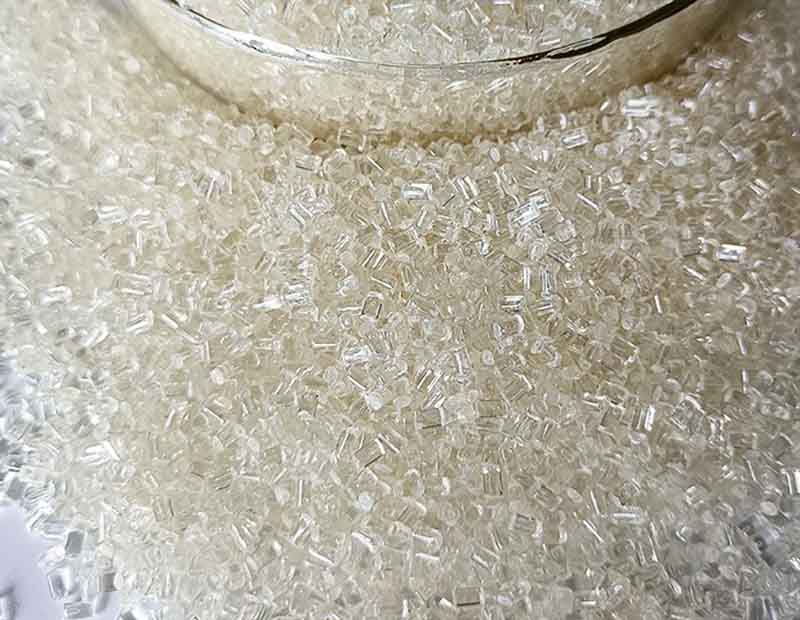
Polysulfone resin pellets are commonly used for injection molding and extrusion processes. These pellets are widely used in the mass production of plastic components.
PSU Sheets and Rods
PSU material is also supplied in sheet and rod forms for CNC machining and precision fabrication. These semi-finished materials allow manufacturers to produce custom parts with high dimensional accuracy.
PSU Tubes and Profiles
Extruded PSU tubes and custom profiles are used in specialized industrial equipment and fluid handling systems.
Processing Methods for Polysulfone Material
Polysulfone plastic can be processed using various manufacturing techniques depending on the product requirements.
Injection Molding
Injection molding is widely used for mass production of PSU polymer components such as housings, connectors, and medical parts.
CNC Machining
CNC machining is commonly used for producing precision components from PSU sheets and rods, especially when tight tolerances and custom geometries are required.
Extrusion
Extrusion processes are used to produce continuous profiles such as tubes, sheets, and specialized structural components made from polysulfone resin material.
Thermoforming
PSU sheets can also be thermoformed to create large structural parts and protective covers.
Applications of Polysulfone PSU Material
Due to its high performance, Polysulfone plastic is widely used across various industries.
Medical and Healthcare
Because PSU material can withstand repeated sterilization, it is commonly used in:
Surgical instruments
Medical device housings
Sterilization trays
Dialysis equipment
Electronics and Electrical Industry
The excellent electrical insulation properties of PSU polymer make it suitable for:
Electrical connectors
Circuit board components
Switch housings
Insulating components
Food Processing Equipment
Polysulfone resin material is used in food processing equipment due to its temperature resistance and durability.
Automotive Industry
In the automotive sector, PSU plastic components are used in:
Fluid handling systems
Sensor housings
High-temperature connectors
Industrial Equipment
PSU raw materials are used to produce precision components in pumps, valves, and filtration systems where high mechanical strength and chemical resistance are required.
Advantages of PSU Material Over Other Plastics
Compared with many standard engineering plastics, Polysulfone PSU offers several advantages:
Higher temperature resistance than many common plastics
Excellent hydrolysis resistance for steam environments
Strong mechanical properties and durability
Superior dimensional stability
Good electrical insulation performance
These advantages make PSU polymer a preferred material in industries requiring long-lasting and reliable components.
Polysulfone resin material (PSU) is a versatile and high-performance thermoplastic widely used in industries requiring durability, heat resistance, and chemical stability. With its excellent mechanical properties, high temperature tolerance, and outstanding hydrolysis resistance, polysulfone plastic has become an important material for advanced engineering applications.
