


Polysulfone Resin Material is a high-performance thermoplastic known for its excellent heat resistance, mechanical strength, dimensional stability, and chemical resistance. Commonly abbreviated as PSU, polysulfone resin is widely used in industries that require durable materials capable of maintaining reliable performance under demanding operating conditions.
With its combination of thermal stability, transparency, and good electrical insulation properties, PSU Resin is suitable for applications in medical devices, water treatment systems, electrical components, automotive parts, and industrial equipment.
Compared with many conventional engineering plastics, Polysulfone Resin offers better performance in high-temperature environments and can maintain its mechanical properties during repeated exposure to hot water and steam, depending on the specific grade and processing conditions.
For manufacturers looking for reliable engineering plastic materials, Polysulfone Resin Materials provide a versatile solution for producing precision components that require long-term stability, strength, and consistent performance.
What Is Polysulfone Resin?
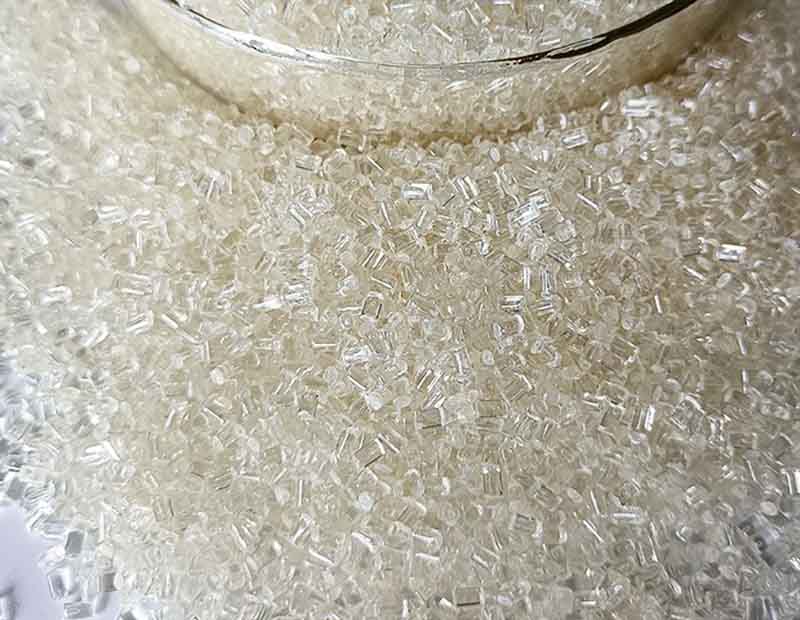
Polysulfone Resin (PSU) is an amorphous, high-performance engineering thermoplastic containing sulfone groups in its molecular structure. It is known for its high glass transition temperature, excellent dimensional stability, and resistance to thermal deformation.
Unlike ordinary plastics, Polysulfone Resin can maintain its structural integrity under elevated temperatures and repeated thermal exposure. Its naturally transparent or amber appearance also makes it suitable for applications where visual inspection of internal components is necessary.
PSU Resin is commonly processed through injection molding and extrusion, allowing manufacturers to produce complex shaPES, precision components, sheets, and tubes.
Its combination of thermal, mechanical, and electrical properties makes Polysulfone Resin Material an important choice for demanding engineering applications.
Key Properties of Polysulfone Resin Material
Excellent Heat Resistance
One of the most important characteristics of Polysulfone Resin Material is its ability to withstand elevated temperatures. PSU typically has a glass transition temperature of approximately 185°C, allowing it to retain useful mechanical properties in applications involving continuous heat exposure.
It is also suitable for certain hot-water and steam sterilization environments, making it valuable for medical and laboratory equipment.
High Mechanical Strength and Dimensional Stability
Polysulfone Resin offers good tensile strength, stiffness, and impact resistance. Its dimensional stability helps maintain component accuracy under changing temperatures and mechanical loads.
These properties make PSU Resin suitable for precision-molded parts used in medical instruments, fluid handling systems, and industrial machinery.
Excellent Hydrolysis Resistance
PSU has good resistance to hydrolysis and can withstand repeated exposure to hot water and steam under appropriate operating conditions.
This characteristic is particularly important for medical devices, sterilization equipment, water treatment systems, and fluid handling components.
Good Chemical Resistance
Polysulfone Resin Materials provide resistance to many acids, alkalis, and aqueous solutions. However, their compatibility with organic solvents and certain cleaning agents should be evaluated carefully.
The actual chemical resistance depends on the chemical concentration, temperature, exposure time, and material grade.
Electrical Insulation Performance
PSU Resin offers good electrical insulating properties and dimensional stability, making it suitable for electrical housings, connectors, insulating components, and electronic equipment.
Transparency and Visual Inspection
Unlike many opaque engineering plastics, natural Polysulfone Resin is typically transparent with a light amber color. This allows manufacturers to produce components that support visual inspection of internal fluids or mechanical structures.
Polysulfone Resin Material Technical Properties
The following table summarizes typical characteristics of unfilled PSU materials. Actual values vary depending on the resin grade, manufacturer, and testing method.
Property | Typical Characteristics |
|---|---|
Material | Polysulfone (PSU) |
Appearance | Transparent Amber |
Polymer Structure | Amorphous Thermoplastic |
Glass Transition Temperature | Approximately 185°C |
Heat Resistance | High |
Mechanical Strength | Good |
Dimensional Stability | Excellent |
Hydrolysis Resistance | Excellent |
Chemical Resistance | Good against many aqueous chemicals |
Electrical Insulation | Good |
Processing Methods | Injection Molding, Extrusion |
For accurate material selection, refer to the technical data sheet (TDS) of the specific PSU resin grade.
Applications of Polysulfone Resin
Polysulfone Resin is widely used in industries where conventional plastics cannot provide sufficient thermal stability, mechanical strength, or chemical resistance.
Polysulfone Resin for Medical Devices
Polysulfone Resin for Medical Devices is valued for its ability to withstand repeated sterilization cycles and maintain dimensional stability. Its transparency also allows healthcare professionals to inspect fluids and internal components.
Common applications include:
Medical instrument housings and components
Surgical instrument parts
Sterilization trays and equipment
Dialysis and filtration components
Fluid management systems
Laboratory equipment
For medical applications, manufacturers should select appropriate medical-grade PSU materials with verified biocompatibility, sterilization compatibility, and regulatory documentation. Not all standard PSU grades are automatically suitable for medical use.
Water Treatment and Filtration Systems
PSU Resin is commonly used in water treatment equipment because of its hydrolysis resistance, mechanical strength, and ability to withstand hot-water exposure.
Typical applications include membrane support structures, filtration housings, water distribution components, and fluid handling equipment.
Electrical and Electronics Industry
Thanks to its electrical insulation properties and thermal stability, Polysulfone Resin Material is suitable for various electrical and electronic components.
Applications include electrical connectors, insulating parts, switch components, and protective housings.
Automotive and Transportation
In the automotive industry, Polysulfone Resin can be used for components exposed to elevated temperatures and demanding operating conditions.
Its dimensional stability and mechanical strength make it suitable for selected fluid handling components, electrical housings, and precision automotive parts.
Food Processing and Laboratory Equipment
PSU Resin is also used in selected food processing and laboratory applications where transparency, heat resistance, and repeated cleaning are important.
Depending on the application, food-contact compliance and chemical compatibility should be confirmed before use.
PSU Resin vs. Other High-Performance Engineering Plastics
Polysulfone is part of the sulfone polymer family. It is often compared with PPSU and PES because these materials share certain thermal and mechanical characteristics but have different performance advantages.
Material | Main Characteristics | Typical Applications |
|---|---|---|
PSU (Polysulfone) | Good heat resistance, transparency, dimensional stability | Medical equipment, filtration, electrical components |
PPSU (Polyphenylsulfone) | Higher impact resistance and excellent steam sterilization performance | Medical devices, surgical instruments |
PES (Polyethersulfone) | Excellent thermal stability and chemical resistance | Membrane filtration, medical and industrial equipment |
PEEK | Very high mechanical strength and temperature resistance | Aerospace, automotive, advanced industrial components |
The right material depends on operating temperature, mechanical loading, chemical exposure, sterilization requirements, and overall production costs.
How to Choose the Right Polysulfone Resin Material?
Selecting the appropriate Polysulfone Resin Material requires evaluating the intended application and processing requirements.
1. Operating Temperature
Determine the continuous operating temperature and any short-term temperature peaks. PSU is suitable for many high-temperature applications, but the actual service temperature depends on component design and operating conditions.
2. Mechanical Requirements
Consider tensile strength, impact resistance, stiffness, and dimensional stability. For precision components, the resin grade should match the expected mechanical loads.
3. Chemical Compatibility
Evaluate exposure to cleaning agents, disinfectants, oils, acids, alkalis, and other chemicals. Special attention should be paid to organic solvents, which may cause environmental stress cracking.
4. Medical and Regulatory Requirements
For Polysulfone Resin for Medical Devices, confirm biocompatibility data, sterilization compatibility, traceability, and relevant regulatory documentation.
5. Processing Compatibility
Check whether the selected PSU Resin is suitable for injection molding, extrusion, or other manufacturing processes. Processing temperature, drying requirements, and mold design can affect final product quality.
Frequently Asked Questions About Polysulfone Resin
1. What Is Polysulfone Resin Used For?
Polysulfone Resin is used to manufacture high-performance plastic components for medical devices, water treatment systems, electrical equipment, automotive applications, and laboratory instruments. It is particularly suitable for applications requiring heat resistance, dimensional stability, and hydrolysis resistance.
2. What Is the Difference Between PSU and Polysulfone?
PSU is the abbreviation for Polysulfone. Both terms refer to the same high-performance amorphous thermoplastic material. PSU Resin is simply another common name used in the plastics industry.
3. Is Polysulfone Resin Heat Resistant?
Yes. Polysulfone Resin offers excellent thermal stability and typically has a glass transition temperature of approximately 185°C. However, its maximum continuous service temperature depends on the specific grade, mechanical load, and operating environment.
4. Is PSU Resin Suitable for Medical Devices?
Yes. Certain medical-grade PSU materials are suitable for medical devices because of their transparency, mechanical strength, and ability to withstand repeated sterilization. However, the specific resin grade must meet the relevant biocompatibility and regulatory requirements.
5. Is Polysulfone Resin Transparent?
Yes. Natural Polysulfone Resin is generally transparent with a light amber appearance. This makes it useful for applications where internal fluid flow or component conditions need to be visually inspected.
6. What Is the Difference Between PSU and PPSU?
Both PSU and PPSU belong to the sulfone polymer family. PPSU generally offers better impact resistance and improved resistance to repeated steam sterilization, while PSU provides a good balance of heat resistance, mechanical strength, transparency, and cost.
7. Can Polysulfone Resin Be Injection Molded?
Yes. PSU Resin can be processed through injection molding and extrusion. Proper material drying, processing temperature control, and mold design are important for achieving stable production quality.
Choose a Reliable Polysulfone Resin Material Supplier
Choosing a reliable Polysulfone Resin supplier is important for ensuring consistent material quality and stable production performance.
Whether you need Polysulfone Resin Materials for medical devices, water filtration systems, electrical components, or industrial applications, selecting the right resin grade is essential to achieving the desired mechanical, thermal, and chemical properties.
A professional supplier should be able to provide detailed technical data sheets, material specifications, processing recommendations, and relevant quality documentation.
Contact us today to discuss your PSU Resin requirements and find the right Polysulfone Resin Material for your manufacturing applications.